Affiliate Program Red Flags: How Affiliates Get Burned
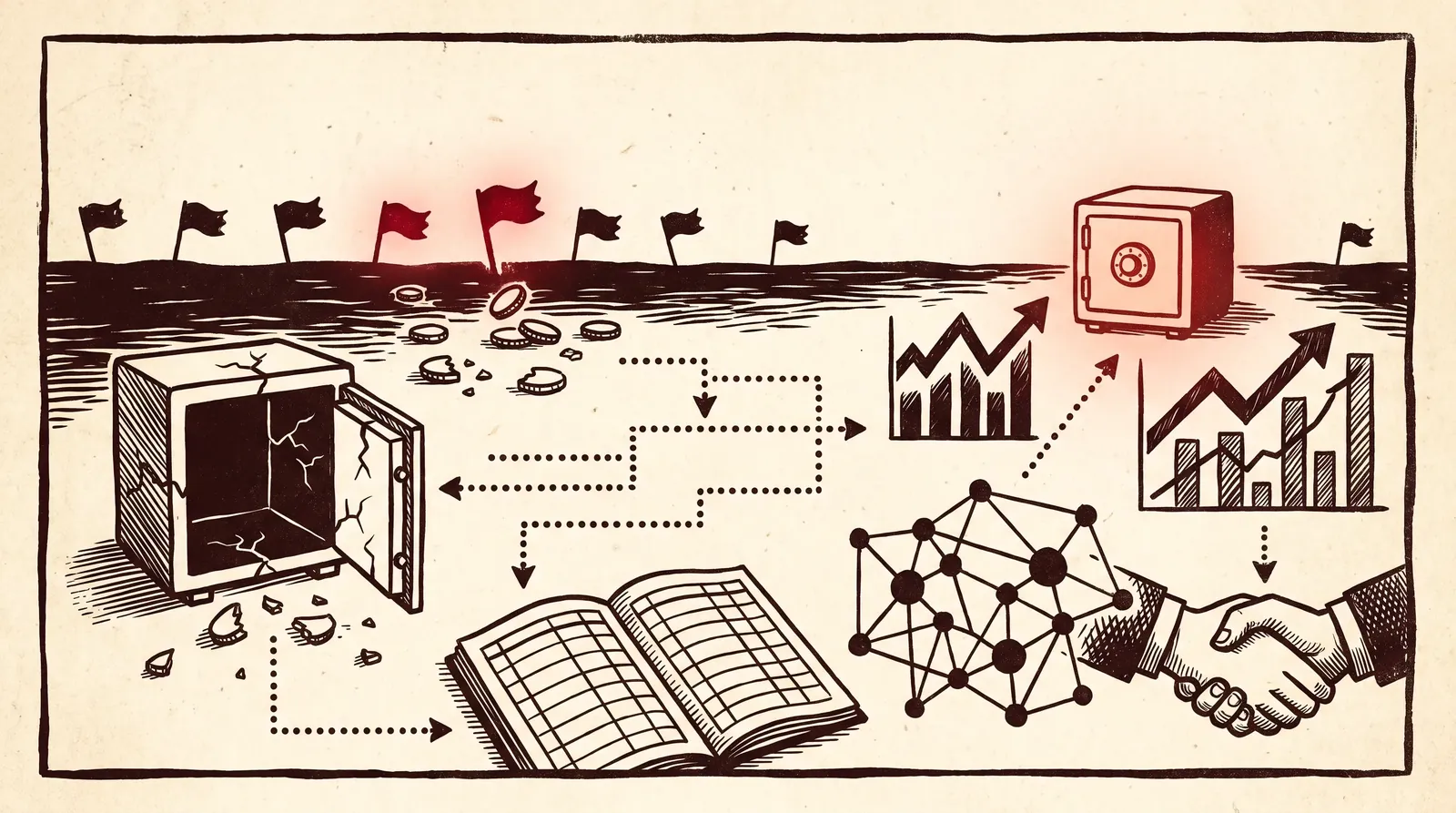
The recurring patterns are: unpublished or login-gated terms, carried negative carryover, minimum-activity clauses that forfeit balances, retroactive commission cuts, payout minimums raised after you qualify, and programs whose operators have a documented history of non-payment. Check the operator's own terms page, the watchdog forums, and this site's scam archive before you send traffic.
Why affiliates are the exposed party
Affiliate agreements are almost always one-sided: the operator runs the tracking, decides what counts as a qualified referral, and can change or terminate the program. When a program fails, the affiliate has usually already delivered the traffic - the loss is realized at the operator's discretion. That is why payout history matters more than headline rates, and why the same failure patterns repeat across the industry.
The eight red flags
- Terms behind a login. "Register to see commission rates" means the rate is negotiated per affiliate and can be individually cut. Programs with published, dated rate cards are materially safer.
- Carried negative carryover. Losses from one referred player are deducted from your next months. Combined with high-roller volatility, this is the most common way a profitable month becomes a frozen balance.
- Dormancy and minimum-activity clauses. "Accounts with no qualifying referrals for 3 months may be closed" - sometimes with balance forfeiture. If you build slow-burning SEO traffic, this clause can erase you before the compounding starts.
- Retroactive term changes. Documented cases exist of programs cutting commission rates with days of notice. Prefer programs whose terms have stayed stable and published.
- Shaving. Conversions deliberately not counted or downgraded ("that player was already registered", "fraud risk score too high") with no audit trail. Watchdog forums track it; a program with repeated shaving reports is unfixable by negotiation.
- KYC weaponization. Identity verification demanded exactly when you cross a payout threshold - then a policy violation is found and the balance is voided. Both sides of such disputes are usually on record; read them before assuming intent.
- The operator's own record. If the operator has refused player withdrawals, changed license jurisdictions repeatedly, or operated under names that later collapsed, treat the affiliate program with the same suspicion - the same management controls your balance.
- Fixed-income recruiting pitches. No legitimate program promises earnings at all. Recruitment pages that advertise a fixed monthly income from "proven systems" are selling courses or - in the worst cases - ponzi referral structures where YOU are the product.
The pre-promotion checklist
- Read the operator's own affiliate terms page, end to end. Note the date you read it.
- Search the program name together with "affiliate not paid", "shaving", "closed my account" in watchdog forums and on Bitcointalk.
- Check the scam archive - and check whether the operator's sister brands appear in it.
- Start with a small traffic slice and verify the first payout actually arrives, in the coin and on the schedule the terms promise.
- Keep records: screenshots of the terms at signup, your tracking stats, and every support exchange.
If a program stops paying
Document everything first (dashboard stats, correspondence, the terms version you signed under). Then: raise it with the affiliate manager in writing, give a reasonable deadline, and only then take it public on the watchdog forums - public threads are what historically moved stalled payments. Regulators rarely help with affiliate disputes specifically, but documented non-payment strengthens the community record that protects the next affiliate.
The scam archive documents the industry's collapses and non-payment cases with sources - check it before you sign up with anyone.
The scam-adjacent spectrum
Not every burn is a scam, and the difference matters when you document one. The spectrum runs from sloppy operations (late payouts that eventually arrive) through contractual abuse (shaving, retroactive cuts, weaponized KYC) to outright fraud (programs that never intended to pay, ponzi referral tiers, fake broker CPA networks [2]). Regulators and courts treat the last category differently - promoters have been charged alongside operators - but from an affiliate's perspective the first two categories destroy businesses just as reliably. Track them all, label them precisely, and never upgrade "sloppy" to "scam" without the receipts.
Case patterns from the archive
The documented cases repeat a few structures: ponzi schemes that used affiliate/referral tiers as their growth engine (the promoters earned from the influx until the influx stopped); cloud-mining programs whose "affiliate program" was functionally the sales department; fake trading-bot funnels where the affiliates were lead generators for fraudulent broker introductions; and rogue gambling programs that accumulated affiliate balances until the operator shut down. Each case in the scam archive carries the sources that document it - the warning signs below are what those cases had in common.
How this directory uses the record
Programs whose operators appear in the archive are labeled on their program pages - a watch status means live but with complaints on the record; a scam status means documented non-payment or fraud, and those programs are excluded from every ranking on this site. The archive is the reason the labels can be trusted: it is built from dated, sourced cases rather than reputation.
It can be. Undisclosed paid promotion is the bright line regulators draw: paid promotion without disclosure has drawn penalties against individual promoters, and securities regulators have charged promoters of token sales [1]. Disclose, keep records, and treat "marketing claims" as regulated statements rather than marketing.
What is "shaving" in affiliate programs?
Shaving is the operator deliberately not counting - or downgrading - conversions you deliver. It lives in the tracking layer where only the operator can see the truth. Watchdog forums are the main detection mechanism; repeated shaving reports about one program are effectively disqualifying [3].
What records should I keep as an affiliate?
The terms version you signed up under (screenshot with date), your tracking dashboard statistics at regular intervals, every payout request and response, and every support exchange. When a dispute or chargeback-style recovery happens, the timestamped record is the case.
Can I trust a program with a published rate card?
A published card is a good sign - it is the opposite of terms behind a login - but it is not a guarantee. Verify payout reputation separately: the card tells you what they promise, the community record tells you whether they pay.